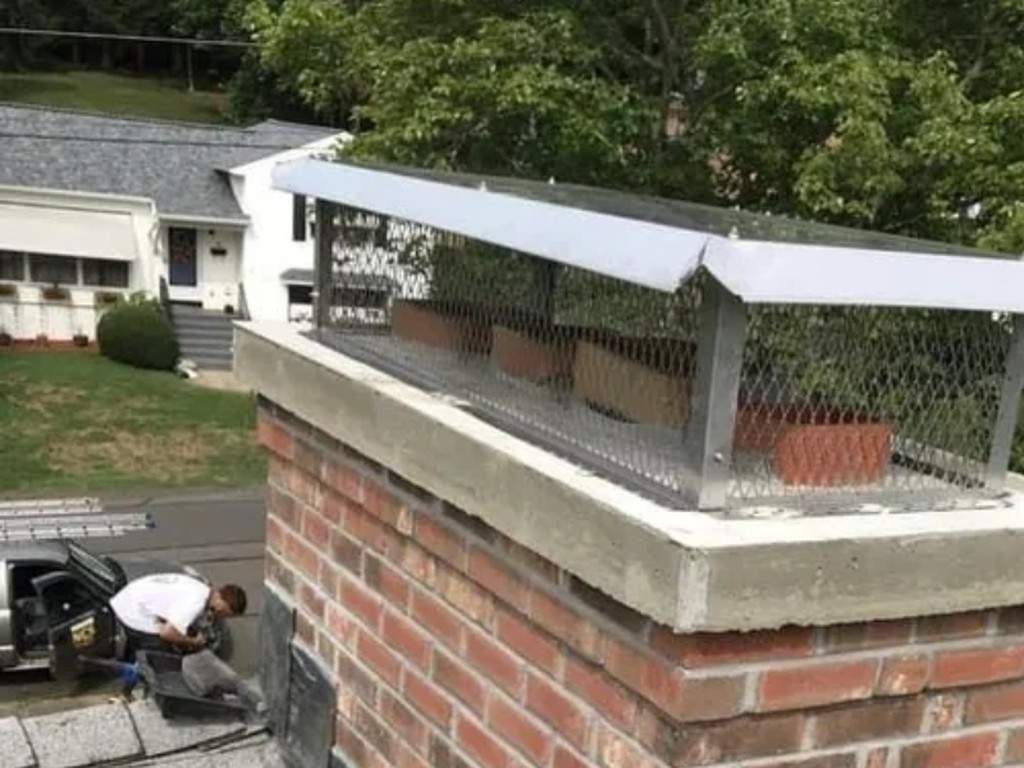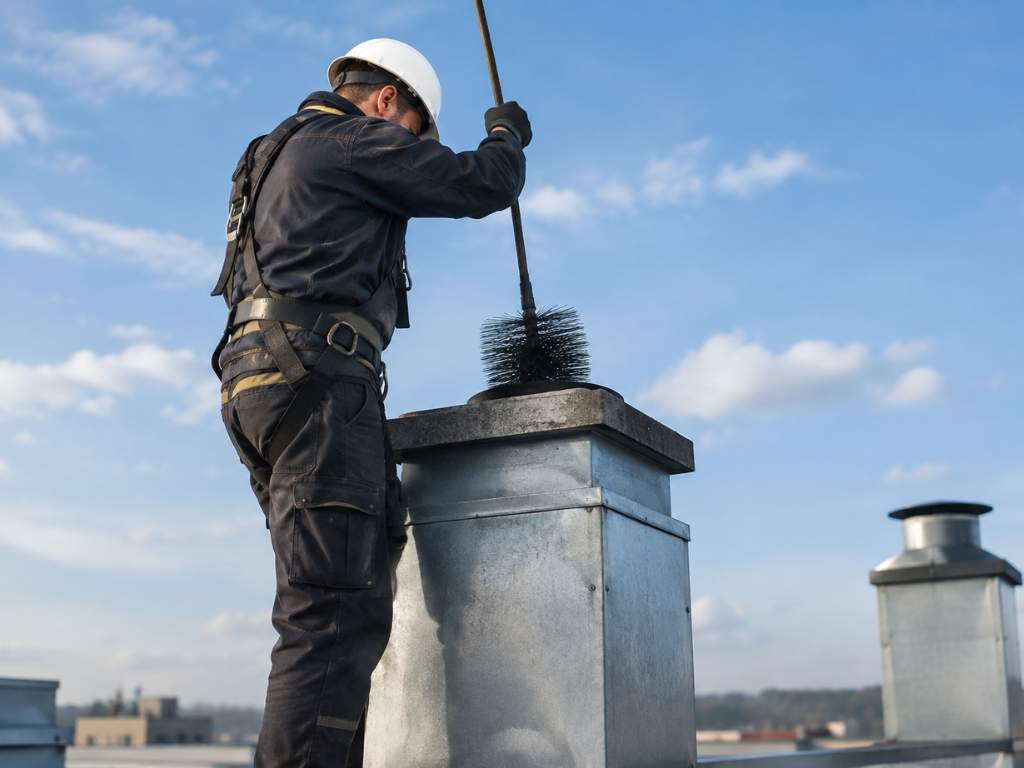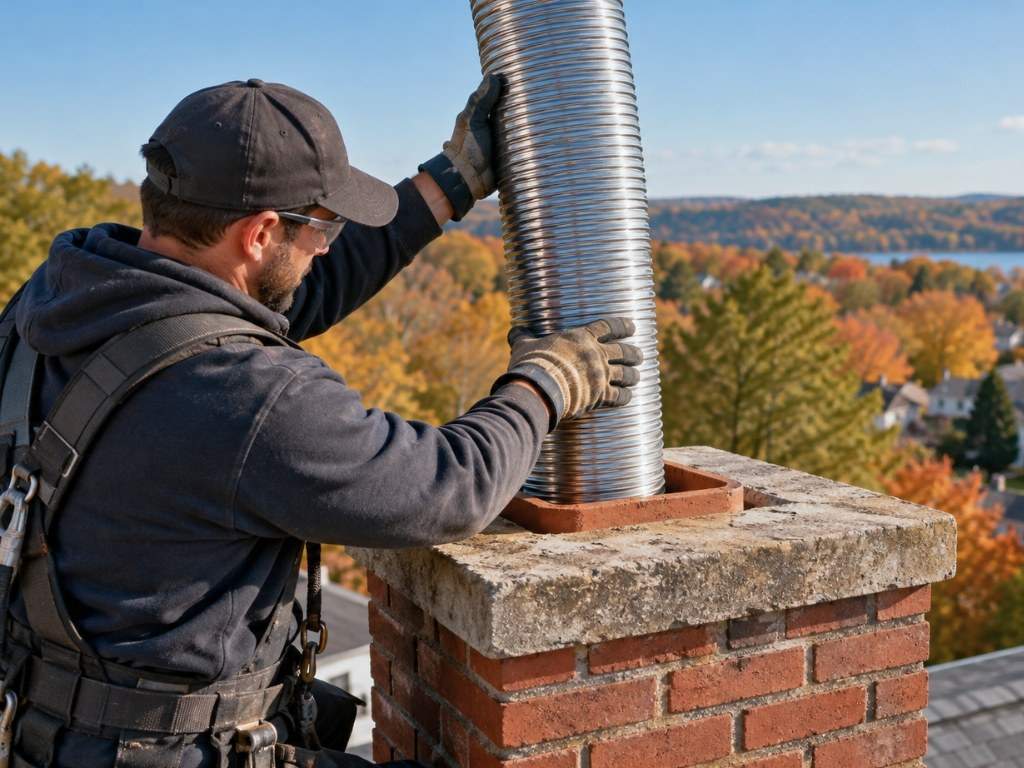
As Connecticut temperatures drop, your fireplace, wood stove, boiler or furnace starts working hard. The chimney liner is easy to forget, yet it does two critical jobs: it vents combustion gases safely out of your home and protects the chimney structure from heat.
Over time, liners crack, deteriorate or stop matching the appliance they serve. Knowing when chimney liner installation is needed helps you avoid a cold-weather emergency and costly damage.
Here is what to know about warning signs, liner materials, cost factors and the installation process, before the coldest months arrive.
Quick Answer: Chimney Liners at a Glance
| Question | Short answer |
|---|---|
| What does a liner do? | Contains heat and combustion gases and guides them safely out of the house |
| Top warning signs | Clay tile pieces in the firebox, smoke or odors indoors, a past chimney fire, a new appliance |
| Most common relining option | A UL-listed stainless steel liner sized to the appliance |
| How long does it take? | Straightforward jobs can often be done in a day; complex chimneys take longer |
| First step | A professional chimney inspection, ideally with a camera |
What Are the Signs Your Chimney Liner Has Failed?
A damaged chimney liner is rarely visible from outside. These warning signs mean it is time for an inspection:
- Cracked or deteriorating flue tiles: Damaged clay tiles, missing mortar joints or visible cracks inside the chimney.
- Falling debris: Pieces of clay tile or masonry collecting in the fireplace or chimney cleanout.
- Smoke entering living spaces: Smoke backing up can point to venting problems, blockages or an improperly sized flue.
- Unusual chimney odors: Persistent smoky or musty smells can come from creosote, moisture intrusion or other problems.
- A previous chimney fire: The extreme heat of a chimney fire can crack clay liners or damage metal components.
- A new heating appliance: A new furnace, boiler, insert or wood stove may need a different liner size or material.
These symptoms do not always confirm liner failure, but they do call for a professional look. If you suspect serious damage or exhaust gases entering your home, stop using the appliance until it has been inspected.
Why Do Clay Flue Liners Fail in Connecticut?
Most older Connecticut chimneys are lined with stacked terra cotta flue tiles. The tiles should be bonded with a refractory cement made for the inside of a chimney. In our inspections, we often find basic mortar was used instead, and it breaks down in the harsh conditions inside a flue, especially through Connecticut winters. Over time, gaps open between tiles.
Clay tiles are also vulnerable to thermal shock. During a chimney fire, the inside face of a tile heats and expands much faster than the outside, and the tile can crack. Once there are gaps or cracks, heat and gases can reach the chimney walls and nearby framing.
What Types of Chimney Liners Are There?
The right liner depends on your chimney’s condition, fuel type and appliance specifications. For a deeper comparison, see our guide to the different types of chimney liners.
Stainless Steel Liners
Stainless steel is the most common way to reline an existing masonry chimney. It comes in rigid and flexible forms to fit different chimney layouts, and it is often needed when a new high-efficiency gas appliance requires a smaller flue.
Neighborhood Chimney Services installs stainless steel liners for wood stoves, pellet stoves, inserts and oil furnaces. Our 316L flexible liners are listed and tested by UL to the UL 1777 and ULC-S635 standards. They can vent wood, pellet, coal and non-condensing gas and oil appliances with efficiencies of 83% or lower, and every stainless liner we install carries a lifetime manufacturer’s warranty.
Clay Tile Liners
Clay tile is the traditional liner in masonry chimneys. It provides a heat-resistant path for gases and can perform well when properly built and maintained. However, tiles can crack after chimney fires, settling or long-term wear, and replacing damaged sections can mean substantial masonry work. That is why most homeowners with failing tiles reline with stainless steel instead.
Cast-in-Place Liners
Cast-in-place systems use a cement-like material poured or formed inside the existing chimney to create a continuous lining. They can suit some masonry chimneys with irregular shapes, but they require specialized equipment and contractors.
What Affects the Cost of Chimney Liner Installation?
Every chimney is different, so the only reliable price is a written estimate after an inspection. These factors drive the cost:
- Liner material and type: Stainless steel, clay and cast-in-place systems have very different material and labor needs.
- Chimney height and flue size: Taller chimneys and larger flues need more material and time.
- Access: Steep roofs and complicated chimney configurations add labor.
- Existing damage: Cracked masonry, failing mortar or blockages may need repair first.
- Additional components: Insulation, a chimney cap, connectors and top plates add to the total.
Ask for an itemized estimate so you can compare options. We also offer financing on qualifying projects; ask about it when you request a quote.
What Is the Chimney Liner Installation Process, Step by Step?
Step 1: Chimney Inspection
A technician examines the chimney, evaluates the liner and checks the connected appliance. A camera inspection of the flue can reveal hidden cracks and gaps. Learn what to expect from a professional chimney inspection.
Step 2: Measurements and Material Selection
The flue dimensions and the appliance’s venting requirements determine the correct liner size, material and configuration.
Step 3: Chimney Preparation
The flue is cleaned and obstructions are removed. Depending on condition, damaged tiles or components may need repair or removal before the new liner goes in.
Step 4: Liner Installation
The liner is lowered into the chimney and secured according to the manufacturer’s instructions and applicable requirements.
Step 5: Insulation and Appliance Connection
Any required insulation is installed, and the liner is connected to the fireplace insert, stove, furnace or boiler. A top plate and cap finish the installation.
Step 6: Final Check
The technician checks the connections and the draft before the system returns to service.
Straightforward projects can often be completed in a day. Taller chimneys, difficult access or repairs can take longer.
Why Should You Check Your Liner Before the Coldest Months?
A sound liner contains combustion gases, limits heat transfer to the chimney structure and supports proper venting all season.
The National Fire Protection Association reports that nearly half (46%) of U.S. home heating equipment fires occur between December and February, based on 2019 to 2023 data. Those fires involve many kinds of heating equipment, not just chimney liners, but the pattern shows why heating systems deserve attention now.
Checking your liner now:
- Finds damage before the heaviest heating use.
- Leaves time for repairs or relining before January.
- Confirms the liner matches your appliance.
- Reduces the chance of a mid-winter shutdown.
- Lets you plan the cost instead of reacting to an emergency.
This matters most in older Connecticut homes with aging masonry chimneys or recently replaced heating equipment.
What Should You Ask at a Chimney Inspection?
If you suspect liner damage, an inspection is the most reliable way to decide between repair and relining. Ask:
- Is the existing liner structurally sound, with no cracks or open joints?
- Is it the right size for my appliance?
- Is it compatible with my fuel type?
- Can I see the camera footage or photos of any problems?
- Can I get a written, itemized estimate for the recommended work?
Frequently Asked Questions
Do I need a chimney liner?
Yes. A liner keeps heat and combustion gases away from the chimney walls and nearby framing. An unlined or badly damaged flue is unsafe to use.
How long does a stainless steel chimney liner last?
A properly sized and installed stainless steel liner is built for long service. The stainless liners we install carry a lifetime manufacturer’s warranty.
Do I need a new liner when I replace my furnace or stove?
Often, yes. New appliances, especially high-efficiency gas units, may need a smaller or different liner than the old one. A technician can confirm.
Can I use my fireplace with a cracked liner?
It is not recommended. Cracks can let heat and gases reach combustible materials. Stop using the appliance until it has been inspected.
Can you install a liner in winter?
Yes, as long as roof conditions are safe. Scheduling before the coldest weeks gives the most flexibility.
Protect Your Home With Professional Chimney Liner Installation
A sound chimney liner means safer heating, reliable venting and a longer-lasting chimney. Spotting deterioration early and choosing the right liner help Connecticut homeowners avoid preventable problems.
Neighborhood Chimney Services, based in Wolcott, provides chimney liner installation across Connecticut. Our team will inspect your chimney, explain your options and install a properly sized stainless steel liner.
Call 203-872-5339 or contact us to schedule a chimney inspection before the coldest months.