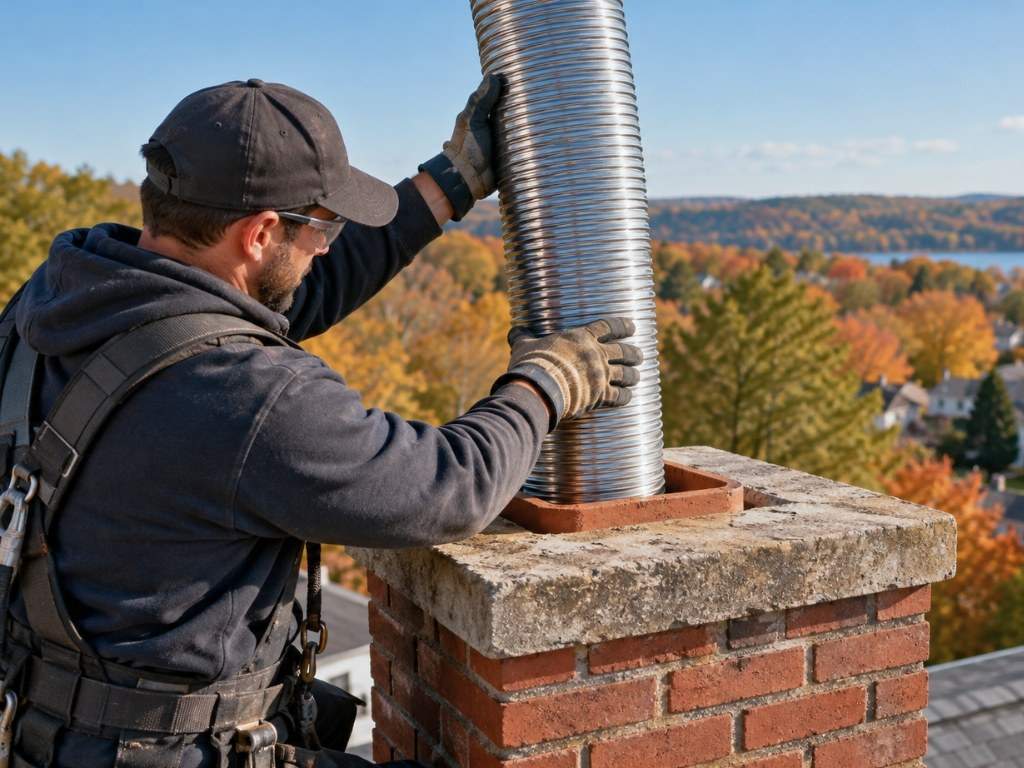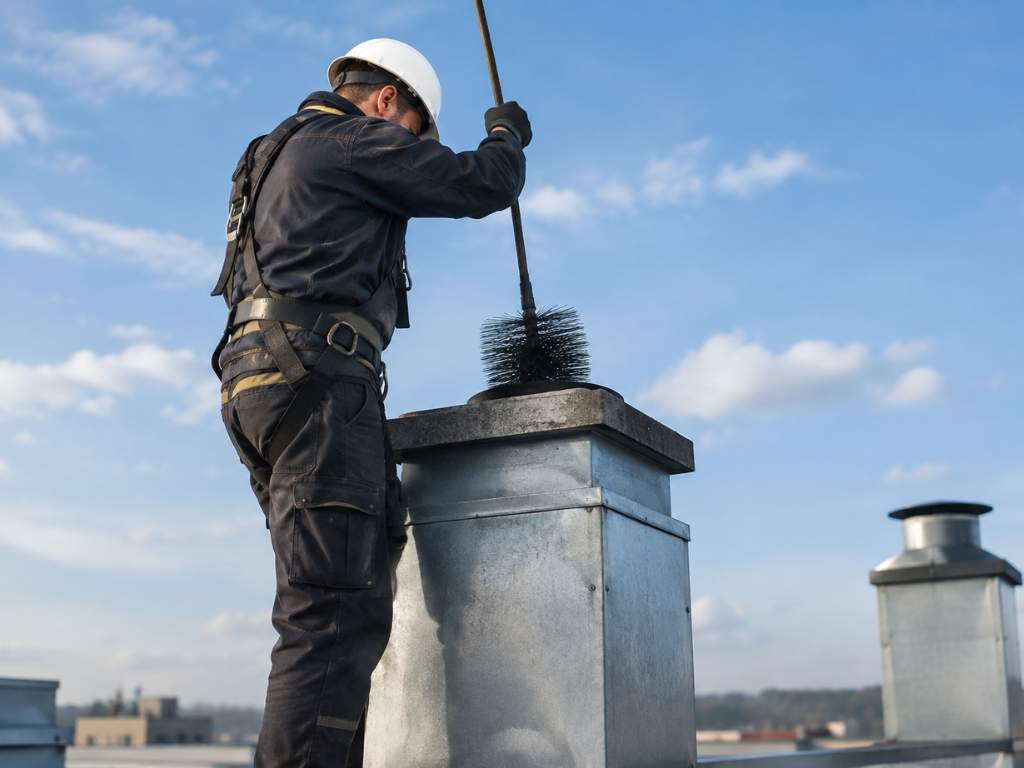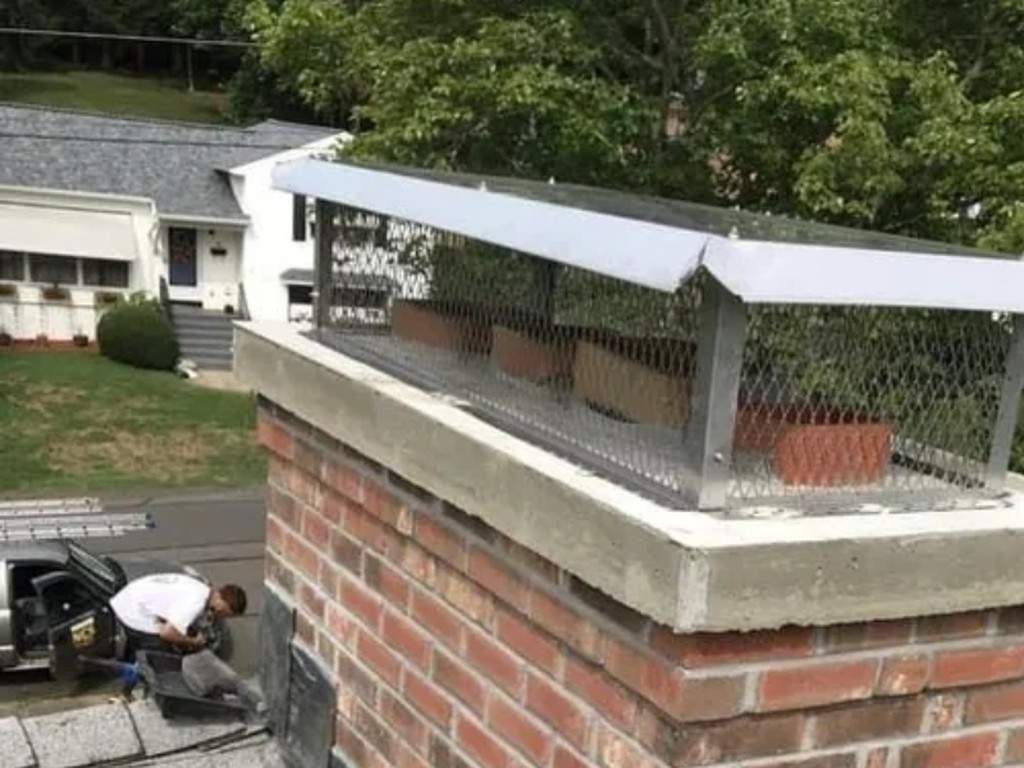
Most homeowners never see the top of their chimney, so a cracked crown can go unnoticed for years. Then a winter of rain, snow and hard freezes turns a hairline crack into a leak, stained ceilings or crumbling brick.
The good news is that crown problems caught early are usually the simplest and least disruptive chimney repair you can make. A sound crown keeps most rain and snowmelt out of the top of the chimney, so repairing it early helps protect the flue, the brickwork and the inside of your home from water damage.
Below you will find what the crown does, the warning signs to look for, why Connecticut winters are so hard on crowns, and how a chimney professional decides between sealing, repairing and rebuilding.
Quick Answer: Chimney Crowns at a Glance
| Question | Short answer |
|---|---|
| What is the crown? | The concrete or masonry slab that covers the top of the chimney around the flue |
| What does it do? | Seals the top of the chimney and sheds rain and snowmelt away from the brick |
| Top warning signs | Cracks, crumbling or flaking concrete, gaps around the flue tile, water stains or leaks |
| Why it gets worse in winter | Water that gets into cracks freezes, expands and pushes the masonry apart |
| Usual fixes | Seal small cracks, repair a sound crown, or rebuild a crown that is failing |
| First step | A professional chimney inspection |
What Is a Chimney Crown?
The chimney crown (also called a chimney wash or splay) is the slab at the very top of a masonry chimney. It closes off the space between the flue liner and the outer chimney wall, which keeps rain and snow from dropping straight into the structure.
According to the Chimney Safety Institute of America (CSIA) technical paper on masonry chimneys, the crown’s job is to close that gap, shed rainwater clear of the chimney and prevent moisture from getting in. The same paper notes that failed or inadequate crowns are among the more common causes of chimney deterioration.
What a well-built crown looks like
Building guidance from the CSIA and the Brick Industry Association’s Technical Note 19B on residential chimneys describes a durable crown this way:
- Concrete, not a thin mortar layer: Precast or cast-in-place concrete several inches thick. Mortar does not weather well when it is used as an exposed wash.
- A real slope: The top surface slopes away from the flue so water runs off.
- An overhang with a drip edge: The crown projects past the face of the chimney so water drips clear of the brick instead of running down it. The CSIA paper cites BIA recommendations for an edge that extends at least two and a half inches beyond the face of the chimney.
- Room to move: The crown should not be bonded directly to the flue liner. A bond break and a flexible sealant at the flue let the liner expand and contract without cracking the crown.
- The flue sticks up: BIA guidance says the flue liner should extend at least 2 inches above the top of the cap.
Many older chimneys in Connecticut were finished with a thin layer of the same mortar used between the bricks, spread across the top and feathered to the edges. That shortcut is exactly what the CSIA and BIA warn against, and it is one of the most common reasons we are called out for crown work.
Signs Your Chimney Crown Is Cracked
You can spot many of these from the ground with binoculars. Never climb onto a roof in wet, icy or windy weather.
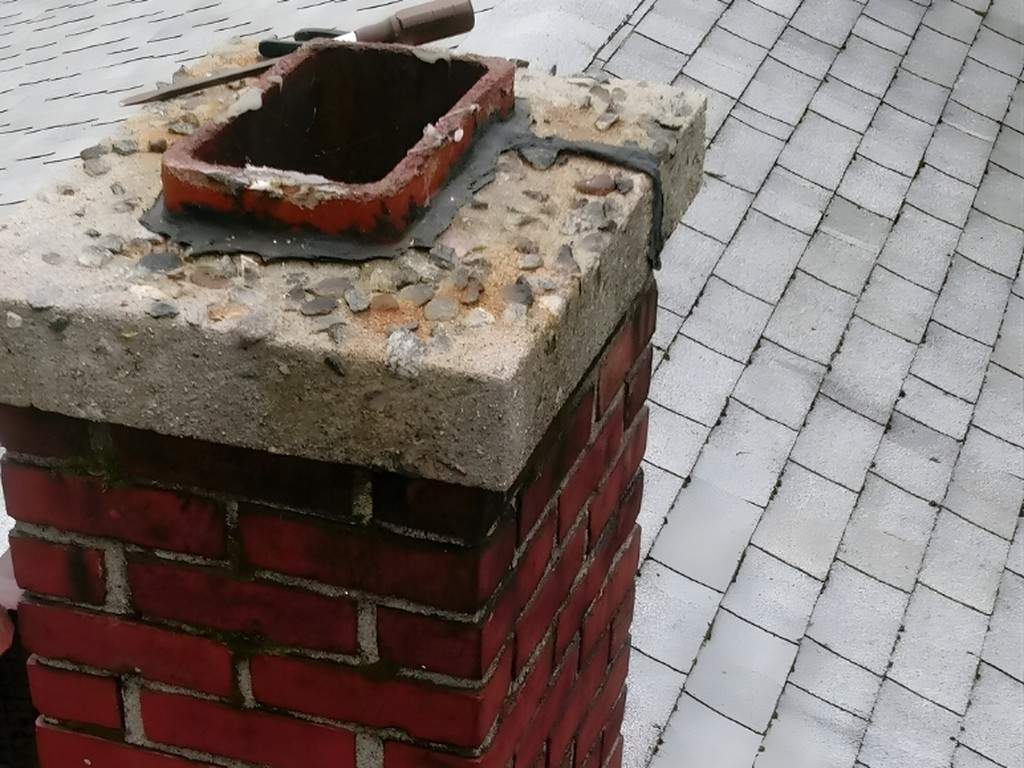
- Visible cracks: Hairline or wider cracks across the top or down the sides of the crown.
- Crumbling or flaking concrete: Loose chunks, exposed stones or a rough, pitted surface.
- A gap around the flue tile: Missing sealant or open space where the crown meets the flue.
- No overhang: A crown that ends flush with the brick lets water run straight down the chimney face.
- Damage just below the top: Spalling brick, eroded mortar joints or white staining (efflorescence) in the top few courses.
- Signs inside the house: Water in the firebox, a rusty damper, damp or stained walls and ceilings near the chimney, or a musty smell.
- Pieces of clay tile in the fireplace: Flakes or chunks of flue tile can point to moisture damage near the top of the flue.
Some of these symptoms can also come from failed flashing or porous brick, which is why a full inspection matters before any repair.
How Do Freeze-Thaw Cycles Damage Chimney Crowns?
Connecticut has cold, snowy winters. NOAA’s Connecticut State Climate Summary puts average winter lows at around 17°F in northern parts of the state and above 25°F along the southern coast, with seasonal snowfall from under 30 inches on the coast to more than 50 inches in the Northwest Hills.
That means your chimney top sits through many days that warm above freezing in the afternoon and drop below it at night. Here is how the damage builds:
- A small crack lets water in. Rain or snowmelt seeps into the crack or the gap around the flue.
- The water freezes and expands. Ice takes up more room than water, so it pushes the crack wider.
- It thaws and more water gets in. The next melt fills the bigger opening, and the cycle repeats.
- Water reaches the inside of the chimney. The CSIA technical paper explains that a deteriorated crown is the usual source of water in the space between the flue liner and the brick. When that water freezes, it presses on both the liner and the chimney wall, and it is not uncommon to find a crack in the liner within the first foot or so below the crown.
Water does far more harm to masonry chimneys than most people expect. A CSIA advisory on chimney water damage lists broken brickwork, rusted dampers, rotted wood, ruined wall coverings and cracked flue liners among the results. Our guide to chimney masonry repair covers what happens when that damage spreads into the brick and mortar.
Repair, Seal or Rebuild: Which Does Your Crown Need?
The right fix depends on how sound the crown is underneath, and that is not always obvious from the surface. The table gives the short version, and the notes below explain how the decision is made and what each option should include.
| Crown condition | Typical approach | What it involves |
|---|---|---|
| Sound crown, hairline cracks | Seal | Clean, fill cracks and coat the crown with a flexible crown sealant made for the job |
| Wider cracks or surface damage, structure still solid | Repair | Remove loose material, patch, reseal the flue joint and apply a waterproof crown coating |
| Crumbling, thin mortar wash, no overhang, or loose pieces | Rebuild | Remove the old crown and form and pour a new concrete crown with a proper slope, overhang and bond break |
| Crown failure plus loose or leaning brick at the top | Rebuild the top of the chimney and the crown | Relay damaged brick, then build a new crown |
Sealing
On our chimney repair page we note that all crowns will crack in time from expansion and contraction, settlement and poor construction, so sealing a sound crown early is often the most cost-effective step. Before sealing, we check that the concrete underneath is firm: we look for loose or hollow spots, crumbling edges and pieces that move when pressed. That check matters because crown sealants are made for sound surfaces. The manufacturer label for ChimneySaver CrownSeal, for example, says the surface must be structurally sound and not loose, and calls for a coat no thinner than 1/8 inch, including around the base of the flue tiles.
Repairing
If the crown is structurally solid but has wider cracks or a deteriorated surface, we remove loose material, patch the damage and restore the seal around the flue before coating it. A coating sits on top of the crown, so it can keep water out of surface cracks but it does not add strength or reattach loose concrete. If the patching shows the damage runs deeper than expected, or the crown has no overhang to shed water off the brick, a rebuild usually gives a longer-lasting result than another coat of sealant.
Rebuilding
A thin mortar wash, a crown with no overhang or a crown that is breaking apart is usually not a good candidate for a coating, because the coating has nothing solid to protect. In those cases we build a new crown using high-grade cement at a proper thickness, whether the chimney is concrete, brick and mortar or stone. According to BIA Technical Note 19B, a poured crown should not be feathered thin at the edges, should include reinforcement to help control cracking from shrinkage and temperature changes, and benefits from flashing that acts as a bond break between the crown and the brick. The joint where the new crown meets the flue liner is then closed with a flexible sealant rather than mortar.
Why November matters
Masonry products have temperature limits. For example, the manufacturer label for ChimneySaver CrownSeal calls for an application temperature of at least 45°F and rising, and says not to apply it if the temperature is expected to drop below 45°F within 24 hours. As Connecticut moves into December and January, days that meet limits like these get scarcer. That is why late fall is a good time to have the crown inspected, while there are still enough mild, dry days to complete the work.
Chimney Crown vs Chimney Cap: What Is the Difference?
People often use these words interchangeably, but they are two different parts that work together.
| Chimney crown | Chimney cap | |
|---|---|---|
| What it is | A concrete or masonry slab built onto the top of the chimney | A metal cover with a lid and mesh sides that mounts over the flue |
| Main job | Seals the top of the chimney structure and sheds water off the brick | Keeps rain, debris and animals out of the flue opening |
| Material | Concrete or masonry | Usually metal |
| Common problems | Cracks, crumbling, no overhang, open flue joint | Rust, loose fasteners, damaged mesh, a missing lid |
| Fix | Seal, repair or rebuild | Repair or chimney cap replacement |
The CSIA advisory recommends both: a well-designed cap to keep out rainwater, birds and animals, and a repaired or replaced crown that projects beyond the chimney. A cap protects the flue opening, but it does not cover the rest of the crown, so a cracked crown can still leak under a brand-new cap. If your cap is damaged too, see our page on chimney cap repair and replacement.
What Happens During a Chimney Crown Repair?
Every chimney is different, but a typical crown repair with our team follows these steps:
- Inspection: We check the crown, the flue, the brick and the flashing, and look for signs of water inside. Our chimney inspection service is the right starting point.
- A clear recommendation: We explain whether the crown needs sealing, repair or a rebuild, and what else (if anything) is letting water in.
- Preparation: Loose and deteriorated material is removed and the surface is cleaned.
- The repair: Cracks are filled and sealed, or the old crown is removed and a new one is formed and poured with a proper slope and overhang.
- Sealing the flue joint: The space where the crown meets the flue is closed with a flexible sealant, so the liner can move without cracking the crown.
- Water protection: If the brick is absorbing water, we may recommend waterproofing. Our post on chimney waterproofing explains why breathable, siloxane-based water repellents are used on brick.
Your Pre-Winter Chimney Crown Checklist
- Look at the top of your chimney with binoculars for cracks, chunks or a flush edge with no overhang.
- Check the firebox and damper for water or rust after a heavy rain.
- Look for stains on ceilings and walls near the chimney, in the attic and in the basement.
- Make sure the chimney has a cap and that it is intact.
- Schedule your annual inspection. The NFPA recommends that heating systems and chimneys be cleaned and inspected every year by a qualified professional.
Frequently Asked Questions
How much does chimney crown repair cost?
It depends on the size and condition of the crown, whether it can be sealed or must be rebuilt, the height and pitch of the roof, and whether other repairs are needed. We give you a price after we inspect the chimney, so you only pay for the work it actually needs.
Can I repair my chimney crown myself?
You can safely check the crown from the ground with binoculars and watch the firebox for water after storms. The repair itself means working at the top of a roof, often on a steep pitch, so we recommend leaving it to a professional with the right safety equipment. A pro will also confirm the crown is sound enough for a sealant in the first place, since a coating over failing concrete is unlikely to last. Inspection can turn up related problems, like a cracked flue tile or failed flashing, that a patch would hide.
How long does a chimney crown last?
There is no fixed lifespan. A thick, sloped concrete crown with an overhang and a flexible flue joint holds up far better than a thin mortar wash, which the CSIA notes deteriorates rapidly. Regular inspections catch cracks while they are still small.
Can I use a general-purpose sealant on my chimney crown?
We recommend coatings made specifically for chimney crowns, applied according to the manufacturer’s directions and within their temperature limits. These products are designed to stay flexible as the crown expands and contracts. Crown sealants are also applied as a thicker coat than an ordinary sealer or paint, and they are meant to cover the joint at the base of the flue tiles. General-purpose caulks and roof patches are not designed for that, so they may crack or peel sooner and trap water underneath.
How can I tell if a leak is coming from the crown or the flashing?
It is hard to tell from inside the house, because both can cause stains near the chimney. Water in the firebox, a rusty damper or flakes of flue tile point toward the top of the chimney, while stains on the ceiling or rafters beside the chimney often point toward the flashing where the chimney meets the roof. Leaks only during wind-driven rain can come from either. An inspection checks the crown, flue, brick and flashing together so you fix the actual source the first time.
Can I keep using my fireplace while I wait for a crown repair?
That depends on what else the water has damaged. A crack in the crown on its own does not change how the fireplace burns, but the CSIA technical paper notes that water getting past a failed crown can crack the flue liner near the top. If you see pieces of clay tile in the firebox, or it has been more than a year since your last inspection, have the chimney checked before you light another fire. We can tell you during the inspection whether the flue is safe to use until the crown is fixed.
Book Chimney Crown Repair in Connecticut Before Winter
A small crack in your chimney crown can often be sealed with a fairly simple repair. Left through a Connecticut winter of freezing and thawing, it can grow into damaged brick, a cracked flue liner and water inside your home.
Neighborhood Chimney Services is a CSIA certified service provider and National Chimney Sweep Guild member based in Wolcott, and we handle crown sealing, crown repair and full crown rebuilds across Connecticut. Call us at 203-872-5339 or request a free estimate on our chimney repair CT page to book an inspection before the hard freezes arrive.