Laundry is part of the weekly routine in most homes, so it is easy to load the dryer, press start, and move on. But when was the last time you checked how well your dryer and its exhaust system were actually working?
Lint buildup, restricted airflow, damaged ductwork, and other vent problems can affect drying performance and create potential safety concerns. The U.S. Consumer Product Safety Commission estimates that clothes dryers are associated with an annual average of 6,400 fires, 180 injuries, and nearly $105 million in property damage.
A quick dryer vent cleaning test can help you spot common warning signs. Before your next load, check these seven areas.
Why Check Your Dryer Vent?
Regular dryer vent checks can help you identify airflow problems and maintain safer, more efficient dryer operation.
- Maintain proper airflow: Your dryer needs steady airflow to remove heat and moisture from wet clothes.
- Reduce drying problems: Lint and other obstructions can restrict airflow and lead to longer drying times.
- Prevent excess lint buildup: Routine checks can help you catch accumulating lint before it significantly restricts the vent.
- Spot warning signs early: Watch for unusual heat, weak airflow, excess lint, or changes in your dryer’s performance.
7 Things to Check
Before starting your next load, take a few minutes to check your dryer and vent system. These seven simple checks can help you spot lint buildup, airflow restrictions, and other warning signs that dryer vent cleaning or maintenance may be needed.
1. Check the Lint Screen
Your lint screen is your first line of defense against lint entering the exhaust system.
Remove the screen before starting another load and clear away accumulated lint. ENERGY STAR recommends cleaning the lint filter after every dryer load to improve air circulation and dryer efficiency.
Look closely at the screen as well. Dryer products and laundry residue can sometimes leave a film on the mesh.
A clean lint screen does not replace complete dryer vent cleaning, but maintaining it can reduce the amount of lint traveling farther into the system.
2. Look Behind Your Dryer
Take a look at the vent connection behind your dryer if it is safely visible and accessible.
Is the duct crushed against the wall? Does it have sharp bends or obvious damage?
Restricted or damaged venting can interfere with airflow. You may also notice loose connections or lint accumulating near the duct.
Avoid pulling apart components unless you know how to reconnect them properly. If the duct appears damaged or improperly installed, professional evaluation may be a better option.
3. Check for Unusual Lint Buildup
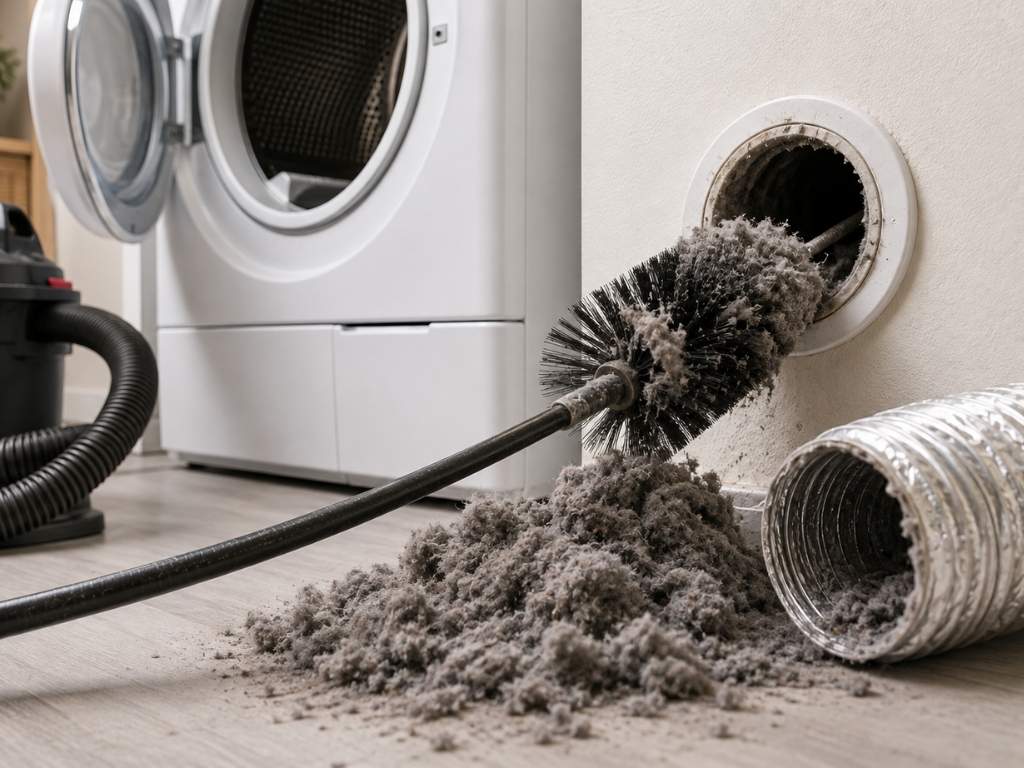
A little lint around a laundry area is not necessarily unusual. Large or recurring accumulations deserve more attention.
Check around the dryer, along the floor, and near accessible exhaust connections.
Lint appearing around a connection could indicate that part of the system needs inspection. The Consumer Product Safety Commission recommends periodically cleaning the dryer vent, exhaust duct, and lint filter as part of dryer maintenance.
4. Pay Attention to Drying Time
Think about how your dryer performed several months ago.
Does a normal load now require two cycles instead of one?
Longer drying times can sometimes indicate restricted airflow, although they can also result from oversized loads or appliance problems. ENERGY STAR notes that overloading a dryer can increase drying time because clothes need space for air to circulate.
If drying times have increased consistently, especially alongside other warning signs, consider checking the exhaust system.
5. Notice Excessive Heat
Dryers naturally produce heat, and freshly dried clothing will normally feel warm. What matters is a noticeable change from normal operation.
Pay attention if your laundry seems unusually hot or the dryer appears to be producing more heat than it previously did, particularly when clothes are also taking longer to dry.
Do not touch hot exhaust components to test them.
If you smell burning, see smoke or sparks, or notice another serious malfunction, stop using the dryer and have it evaluated by a qualified professional.
6. Inspect the Outdoor Dryer Vent
Your dryer vent does not end behind the appliance. Follow its path to the exterior of your home and locate the exhaust termination.
While the dryer operates, observe the vent from a safe position. The exterior flap should generally open as air leaves the system.
Look for visible lint, debris, damaged components, or a flap that does not move properly. Weak exhaust airflow can also suggest that something is restricting the system.
Do not reach deep inside the duct or dismantle inaccessible venting during this inspection.
7. Remember Your Last Dryer Vent Cleaning
Here is the final test: When was your dryer vent last thoroughly cleaned?
Cleaning the lint screen and cleaning the complete exhaust duct are different maintenance tasks. Even when you clean the screen after every load, some lint can travel farther into the exhaust system.
The CPSC advises homeowners to clean lint from the dryer vent pipe at least once a year. Your specific maintenance needs can vary based on dryer use, vent design, household laundry volume, and manufacturer recommendations.
How Did Your Dryer Do?
If all seven checks look normal, continue routine maintenance and watch for changes in performance.
If you noticed longer drying times, unusual heat, lint accumulation, weak exhaust airflow, or damaged ductwork, investigate the cause instead of assuming the dryer is simply getting old.
Keep in mind that dryer vent cleaning cannot fix every dryer problem. Heating elements, sensors, electrical components, damaged ducts, and other mechanical issues may require appliance repair or professional inspection.
Make Dryer Vent Cleaning Part of Home Maintenance
A few minutes of observation can tell you a lot about how your dryer and vent system are performing. Regular checks can help you catch lint buildup, restricted airflow, and other potential problems before they become more difficult to address.
If you can’t remember your last dryer vent cleaning or you’ve noticed signs that your vent needs attention, Neighborhood Chimney Services is ready to help. Our team can thoroughly clean your dryer vent system to remove accumulated lint and help maintain proper airflow.
Contact Neighborhood Chimney Services today to schedule professional dryer vent cleaning and make it part of your regular home maintenance routine.