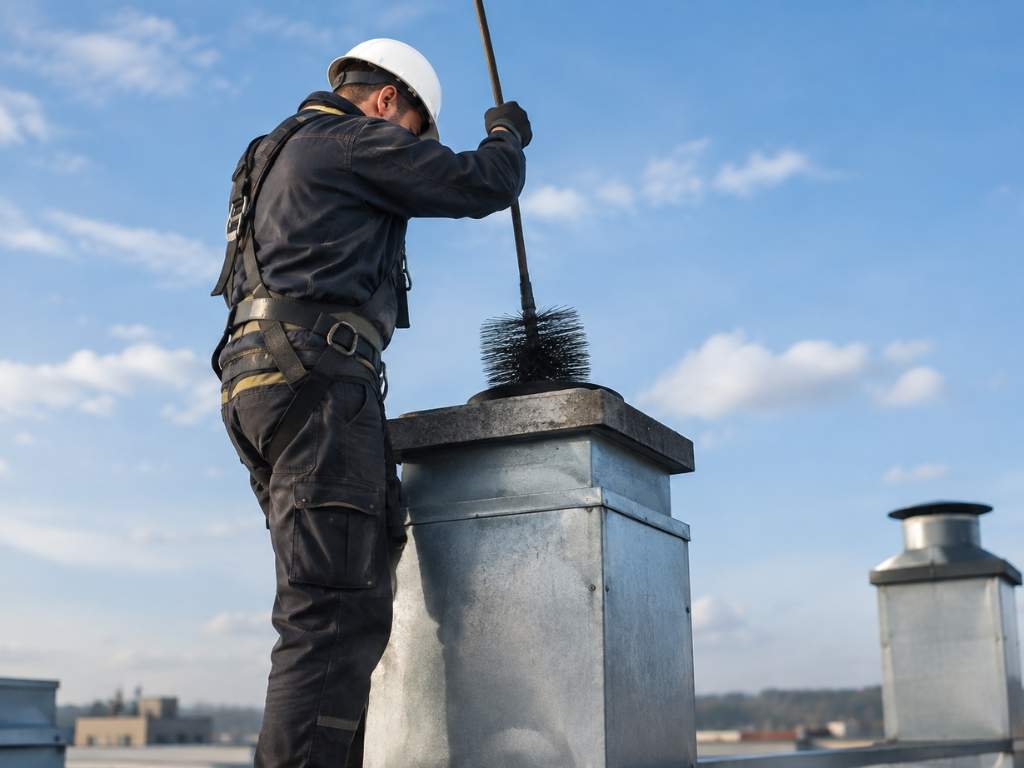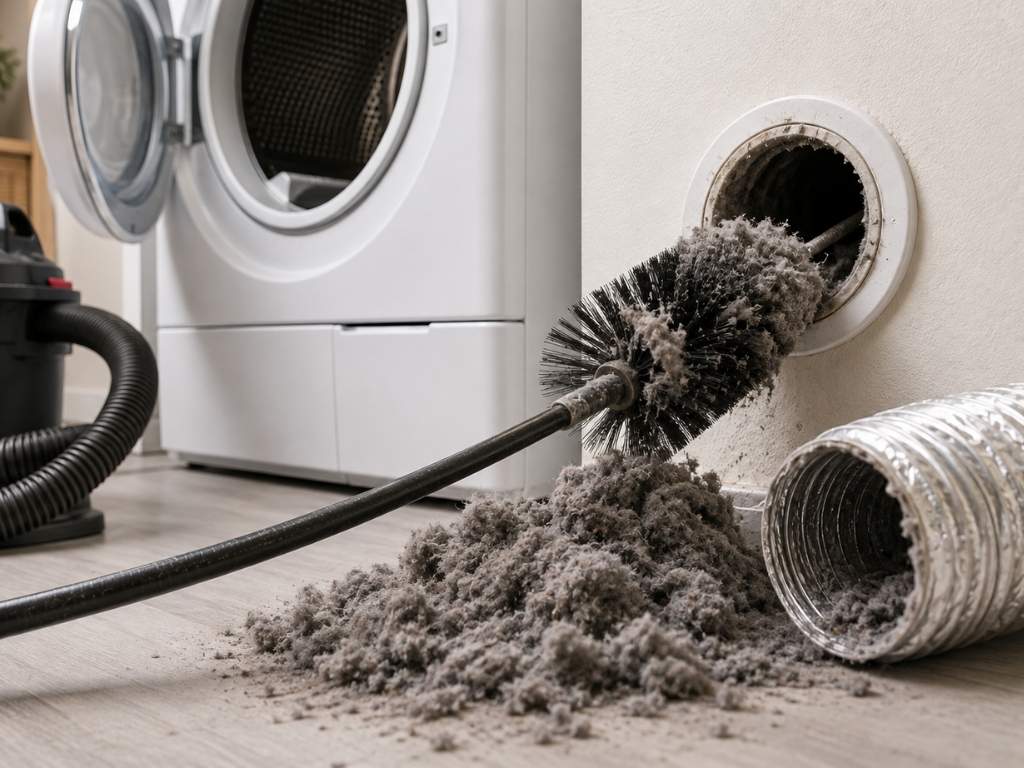
Many property owners stay on top of their major mechanical systems, but the chimney often gets overlooked. When it’s left uncapped, issues start to build up without you noticing. Birds enter the flue, water gets inside, and debris collects over time.
A simple cap prevents these issues and keeps the system operating the way it should. But before you schedule chimney cap installation, here are a few things worth knowing.
Why Chimney Caps Matter for Commercial Buildings
Commercial chimneys take on more strain than a residential system. You may run boilers, commercial heating units, water heaters, laundries, or kitchen exhaust systems. A cap protects these systems from external damage.
A chimney cap helps you:
- Block rain, snow, and moisture that lead to internal corrosion.
- Stop animals from entering the flue and creating airflow blockages.
- Reduce the amount of debris that falls into the system.
- Prevent sparks from leaving the chimney and landing on the roof.
- Extend the service life of your chimney liner installation.
You reduce expensive structural repairs just by installing the right cap and checking it each season. Have you checked the top of your chimney in the last year?
Signs Your Chimney Needs a New Cap
You may not notice issues until the system shows performance changes. A damaged cap allows water to slip into the flue. Birds can also force their way inside if the mesh is worn.
Look for these signs:
- Rust stains around the top of the chimney.
- Dripping sounds inside the flue during rain.
- Strong odor coming from the chimney.
- Slow exhaust or poor draft.
- Frequent pest issues around the roofline.
- Deteriorating chimney liner installation.
Types of Chimney Caps You Can Choose From
You have several options. Your choice depends on the size of your chimney, the fuel type, and the appliance connected to the system.
-
Stainless Steel Caps
Stainless steel caps are durable, corrosion-resistant covers made to protect commercial chimneys from weather and debris. They’re used on most commercial buildings because they hold up well over time, require little maintenance, and work with almost any fuel type.
Pros:
- Resists rust and corrosion
- Works for nearly all commercial systems
- Requires minimal upkeep
- Cost-effective over its lifespan
Cons:
- More visible than copper on high-profile buildings
- Can dent in extreme weather if the steel is thin
-
Copper Caps
Copper caps are high-quality chimney covers that offer long-lasting performance and a professional appearance. They’re typically used on buildings where aesthetics matter or where owners want a premium, long-term solution that naturally resists weather.
Pros:
- Very long-lasting
- Strong weather resistance
- Attractive, premium look
- Lightweight yet durable
Cons:
- Higher upfront cost
- Color changes over time as patina develops
-
Draft-Improving Caps
Draft-improving caps are engineered to correct airflow issues by guiding smoke and exhaust upward more efficiently. They’re used on commercial buildings with persistent draft problems, older chimneys, or locations affected by tall nearby structures or strong wind patterns.
Pros:
- Improves overall chimney performance
- Reduces smoke and odor backup
- Stabilizes airflow in windy areas
Cons:
- More expensive than basic caps
- Must be properly matched to the chimney
- May need occasional adjustments
-
Multi-Flue Caps
Multi-flue caps are large covers designed to protect several flues housed within one chimney structure. They’re commonly used on commercial buildings where multiple heating units, water heaters, or kitchen systems vent through the same chimney.
Pros:
- Protects multiple flues with one cap
- Simplifies inspections and maintenance
- Often cheaper than installing individual caps
- Provides wide, stable coverage
Cons:
- Heavier and may need reinforced hardware
- Usually custom-sized
- Installation can take longer
How Often You Should Inspect Your Chimney Cap
You keep your system safe when you inspect the cap twice a year. Consider checking it:
- Before heating season
- After major storms
- After a pest problem on the roof
- During annual chimney liner installation inspections
If your building has staff on site, you can train them to look for visible damage from ground level. Any unusual tilt or discoloration should be checked by a professional.
Chimney Cap Installation Costs
Commercial chimney cap installation usually ranges from $450 to $1,500 per chimney, depending on the size of the flue, the type of cap you choose, and the access requirements for the building. Larger caps, taller structures, and custom fabrication can push the total higher.
Several factors influence your final cost:
- Chimney height and roof access
Multi-story buildings often require lifts, scaffolding, or specialized safety equipment, which increases labor time. - Cap material
Stainless steel stays within the lower-to-mid range. Copper, draft-improving caps, and custom multi-flue caps sit at the higher end. - Number of flues
A single-flue cap costs less than a multi-flue cap that needs custom sizing. - Chimney condition
Cracks in the crown, loose masonry, or a damaged liner may require repairs before installation. - Custom fabrication
Commercial chimneys vary in size, and some require caps built to exact specifications. Custom orders raise both material and labor costs. - Labor complexity
Older buildings, angled roofs, and limited access points extend installation time and increase cost.
A properly installed cap protects the chimney liner, reduces water damage, and cuts down on maintenance. Investing once often prevents far more expensive repairs later.
How Chimney Cap Installation Works
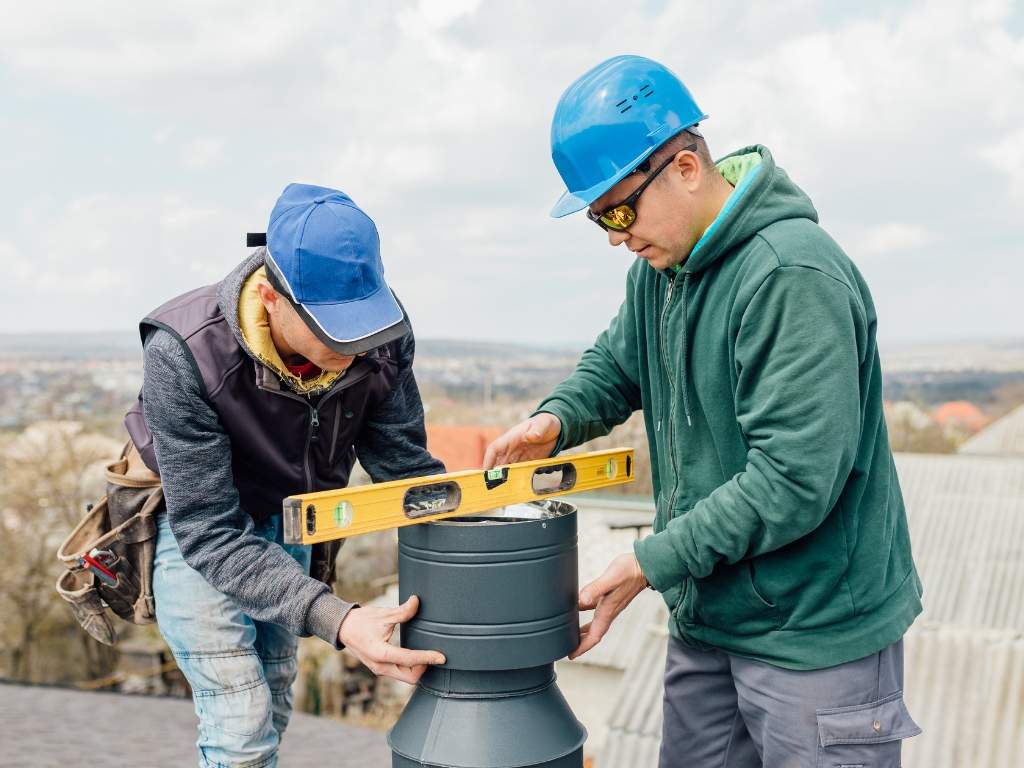
A technician measures the top of the flue, checks the chimney liner installation, and inspects the masonry crown. The cap is secured to prevent movement from wind or thermal expansion.
The installation process starts with measuring the flue to ensure the cap fits correctly. The technician then selects the right material and mesh size, checks the chimney crown for any cracks, and secures the cap with manufacturer-approved fasteners. Once it’s in place, the draft is tested, and the system is checked to confirm that it vents safely.
A well-installed cap stays firm even in severe weather. If your building sits in a windy area, you benefit from reinforced mounting hardware.
Why You Should Hire a Professional for Installation
Commercial chimneys differ from residential systems. Height, fuel type, draft requirements, and local building codes all affect your choices.
A professional ensures:
- Proper sizing for your flue.
- Secure mounting that withstands weather conditions.
- Correct mesh size to prevent blockages.
- Alignment with your chimney liner installation.
- Compliance with fire and safety codes.
If you’re ready to schedule chimney cap installation or need an inspection, Neighborhood Chimney Services can help. Reach out today to get started.
Final Thoughts
Chimney cap installation protects your building, reduces operating costs, and keeps your chimney liner in good condition. You maintain a safer property when you monitor your cap, schedule inspections, and replace components on time.