Replacing an old fireplace can improve your home’s comfort, efficiency, and appearance, but it’s not as simple as removing the existing unit.
Before scheduling a fireplace installation, it’s important to evaluate the structure, venting system, permits, and the type of fireplace that best suits your home. Planning these details in advance helps ensure a safe, efficient, and successful installation.
Why Homeowners Replace Old Fireplaces
An older fireplace may no longer be the safest, most efficient, or most practical option for your home. According to the U.S. Environmental Protection Agency (EPA), traditional open wood-burning fireplaces can lose more than 90% of their heat through the chimney, making them an inefficient source of heat. Other common reasons homeowners choose to replace their fireplaces include:
- Poor Energy Efficiency: Older fireplaces waste heat, making it harder and more expensive to keep your home comfortable.
- Outdated Appearance: Worn brick, dated surrounds, or bulky hearths can make an otherwise updated room feel old-fashioned.
- Frequent Repairs: Cracked fireboxes, damaged dampers, deteriorating masonry, and aging chimney components often require ongoing maintenance.
- Safety Concerns: Structural damage, poor ventilation, or aging components can increase the risk of smoke issues and other safety hazards if left unaddressed.
- Improved Heating Performance: Modern gas, electric, and high-efficiency wood-burning fireplaces provide more consistent heat while requiring less maintenance than older models.
What to Check Before Removing an Existing Fireplace
Before demolition begins, evaluate how the existing fireplace is built, what systems it relies on, and whether any modifications will be needed to safely install the replacement.
Structure
Not every fireplace is decorative. Masonry fireplaces and chimneys may support portions of the home’s framing, roof, or exterior wall.
Before removal, a contractor or structural engineer should determine whether the fireplace is load-bearing and identify any reinforcements required. Skipping this step can lead to structural damage, costly repairs, or safety issues.
Existing Venting System
The type and condition of your venting system will influence your replacement options. Traditional wood-burning fireplaces rely on a chimney, while many gas fireplaces use direct-vent systems that vent through an exterior wall. Electric fireplaces typically require no venting at all.
Inspecting the chimney or vent for deterioration, blockages, or code compliance helps determine whether it can be reused, modified, or should be removed as part of the project.
Local Building Codes and Permits
Fireplace replacements often require permits because they involve structural changes, gas lines, electrical work, or venting systems.
Local building departments may also require inspections during and after installation to verify that the project complies with current building and fire codes. Securing permits before work begins helps avoid delays, failed inspections, and expensive corrections.
Utility Connections
Your utility requirements will depend on the type of fireplace you choose. Gas models require a properly sized gas line, while electric fireplaces may need a dedicated circuit if one is not already available.
If you’re switching from a wood-burning fireplace to a gas or electric unit, additional utility work may be necessary before installation can proceed. Confirming these requirements early makes it easier to plan the project timeline and budget accurately.
Can You Remove a Fireplace Yourself?
While homeowners may be able to remove decorative finishes or prepare the surrounding space, fireplace removal itself often involves structural work, utility disconnections, and demolition that should be handled by experienced professionals. Gas lines, chimneys, and supporting masonry require specialized knowledge to remove safely.
Proper installation is equally important after the old fireplace is removed. According to the EPA, poor maintenance and dirty chimneys contribute to many home heating fires each year, making correct installation and ongoing maintenance essential for safe operation.
Working with qualified professionals, especially from Neighborhood Chimney Services, helps protect both your home and your family.
Removing an Existing Fireplace
Removing a fireplace is a carefully planned process that protects your home’s structure and prepares the space for a safe replacement. While the exact steps vary depending on the type of fireplace, most projects follow the same general sequence.
1 | Disconnect Utilities
Before any demolition begins, all utility connections serving the fireplace must be safely disconnected. Gas fireplaces require the gas supply to be shut off and capped by a qualified professional, while electric fireplaces need the power disconnected at the electrical panel.
Taking this step first eliminates potential safety hazards and ensures demolition can proceed without damaging active utility lines.
2 | Remove the Fireplace Components
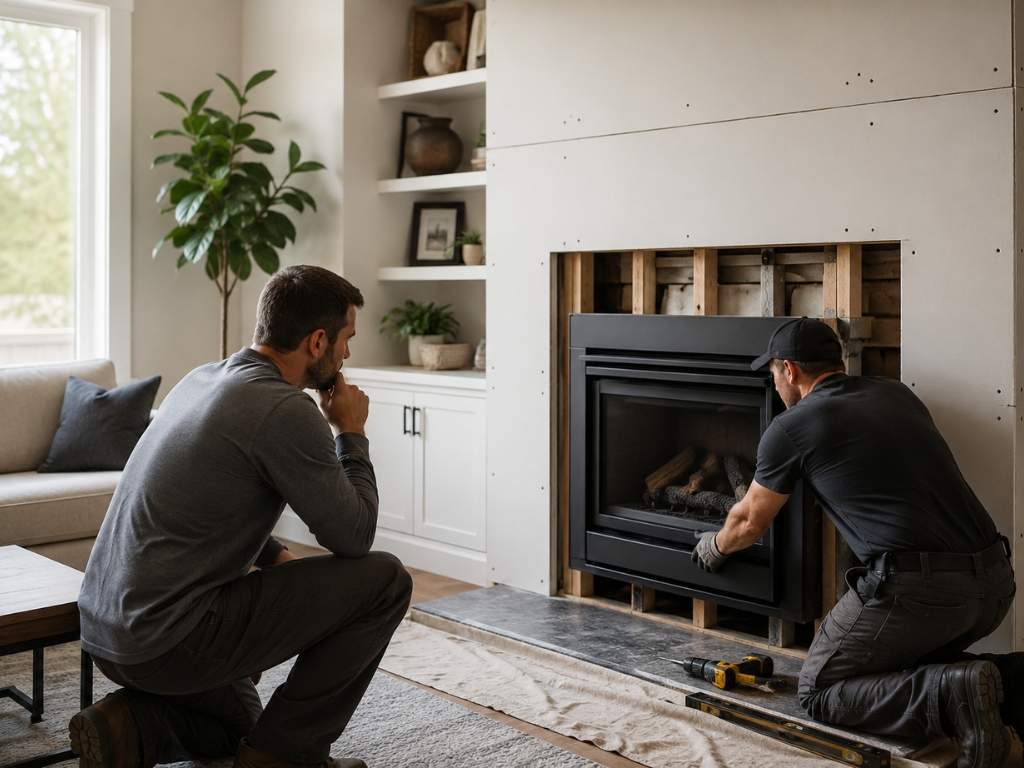
The removal process varies depending on whether the fireplace is wood-burning, gas, electric, or an insert. Contractors typically remove the mantel, surround, hearth, firebox, and any venting or chimney components that are no longer needed.
During demolition, they also inspect the surrounding framing, flooring, and walls for hidden water damage, deterioration, or structural issues that should be repaired before installing the replacement.
3 | Address Structural Changes
If the existing fireplace or chimney contributes to the home’s structural support, those loads must be transferred before removal is completed.
Contractors may install new framing, headers, or roof supports to maintain the home’s structural integrity. This is also the stage where openings left by a removed chimney are repaired and insulated to restore the home’s weather resistance and energy efficiency.
4 | Prepare the Installation Area
Once the old fireplace has been removed, the installation area is cleaned and prepared for the replacement unit. This may involve repairing drywall, reinforcing the floor, updating framing dimensions, relocating utility connections, or modifying vent openings to meet the manufacturer’s installation requirements.
Installing a New Fireplace
Installing a new fireplace involves much more than placing a unit against a wall. Proper installation requires careful attention to venting, utility connections, clearance requirements, and finishing details to ensure the fireplace operates safely, efficiently, and in compliance with local building codes.
1 | Position the Fireplace
The fireplace is carefully positioned according to the manufacturer’s specifications, which include minimum clearances from combustible materials and required installation dimensions.
Proper placement also considers room layout, furniture arrangement, viewing angles, and heat distribution so the fireplace functions as both a heating source and a focal point within the space.
2 | Install Venting and Utilities
Every fireplace has specific utility and venting requirements that must be installed correctly. Wood-burning units require a properly constructed chimney, while many gas fireplaces use direct-vent systems that draw outside air for combustion and safely exhaust gases outdoors. Electric fireplaces require an appropriately sized electrical circuit.
Correct installation of these systems is essential for safe operation, efficient performance, and long-term reliability.
3 | Complete Surround and Finish Work
After the fireplace is fully installed, the surrounding finishes are completed to blend the unit with the rest of the room. This includes installing the hearth, mantel, stone, tile, brick, drywall, or trim selected for the project.
Beyond improving appearance, these materials also help protect nearby surfaces and ensure required clearances around the fireplace are maintained.
4 | Test and Inspect the System
Before the installation is considered complete, the fireplace undergoes a series of operational and safety checks. Contractors verify that ignition systems, ventilation, gas or electrical connections, and airflow function properly while confirming there are no leaks or performance issues.
If required by local regulations, building officials perform a final inspection to verify the installation complies with current building and fire safety codes before the fireplace is placed into regular use.
Plan a Safer, More Efficient Fireplace Upgrade
Replacing an old fireplace can improve your home’s comfort, energy efficiency, and overall appearance. By choosing the right fireplace and ensuring it’s installed correctly, you can enjoy reliable performance and lasting value for years to come.
If you’re planning a fireplace installation, Neighborhood Chimney Services can help. Their experienced team provides professional fireplace installation services, guiding you through every step, from evaluating your existing fireplace to installing a safe, code-compliant replacement that complements your home.