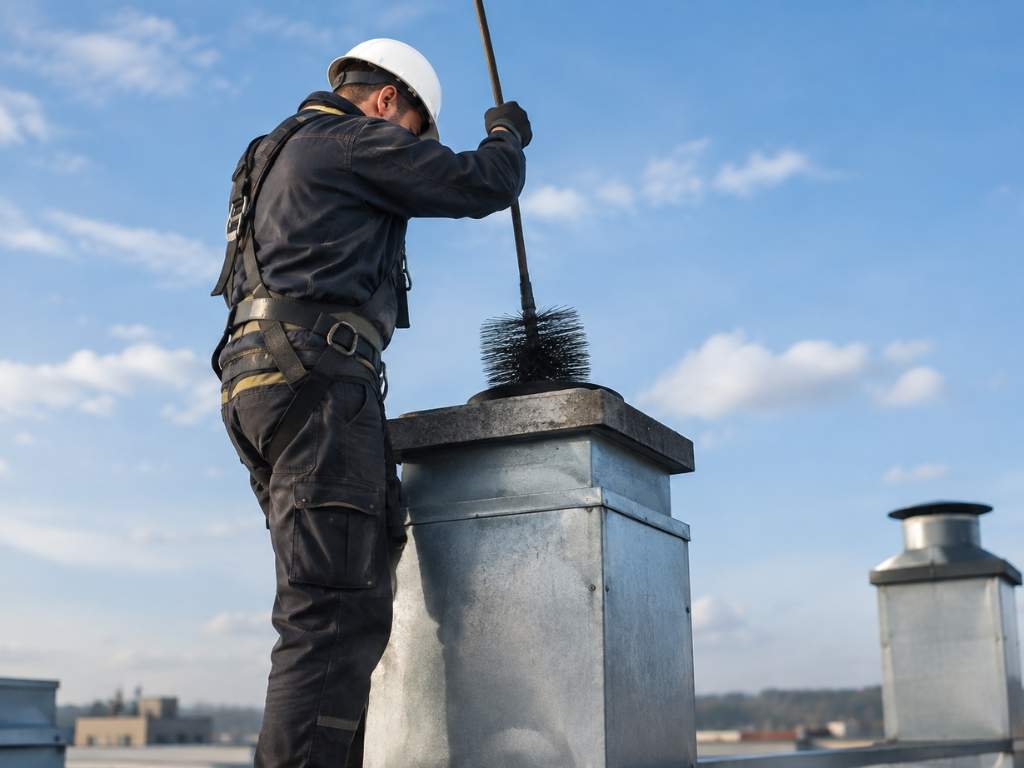
A commercial chimney can go unnoticed when everything appears to be working normally. But soot, creosote, debris, and other materials can accumulate over time, potentially affecting airflow and chimney performance. Eventually, subtle changes such as unusual odors or weak draft may indicate that maintenance is overdue.
For property managers and business owners, recognizing these signs early can make it easier to address chimney concerns before they disrupt normal operations. Here are eight signs that it may be time to schedule commercial chimney cleaning.
Why Is Regular Commercial Chimney Cleaning Important?
Commercial chimneys help direct smoke and combustion gases out of a building. When deposits or debris accumulate inside the system, they can restrict airflow and contribute to performance or safety concerns.
The U.S. Fire Administration estimates that there were 111,900 nonresidential building fires in 2024, with heating responsible for approximately 6% of them. While this statistic covers heating fires broadly rather than chimney fires specifically, it highlights why heating and venting systems deserve attention as part of building maintenance.
The Centers for Disease Control and Prevention also recommends having chimneys checked or cleaned every year because debris can block a chimney and contribute to carbon monoxide buildup.
Warning Signs Your Commercial Chimney Needs Cleaning
Chimney problems do not always appear suddenly. Often, there are smaller warning signs that develop as soot, creosote, debris, or other issues affect the system. Property managers and building owners should watch for these eight signs that it may be time to schedule commercial chimney cleaning.
1. Visible Soot or Creosote Buildup
Dark deposits around the fireplace, chimney opening, or connected appliance can indicate that soot or creosote has accumulated.
These deposits should not be viewed as simply a cosmetic problem. With frequent system use, buildup may continue accumulating inside areas that are difficult to see. A professional chimney evaluation can determine whether cleaning is necessary.
2. Smoke Inside the Building
Smoke should travel efficiently through the chimney rather than entering occupied spaces. If smoke begins backing into the building, there may be an airflow or drafting problem.
Accumulated deposits, debris, animal nesting materials, or damaged chimney components can contribute to restricted airflow. Persistent smoke problems should be professionally evaluated rather than addressed by simply opening doors or windows.
3. Persistent Smoky or Burnt Odors
Does the building smell smoky even when the fireplace or heating appliance is not operating? Deposits inside a chimney can sometimes produce noticeable odors.
Moisture, heat, and changing airflow conditions may make these smells more noticeable. New or increasingly strong chimney odors can be a useful signal that the system needs attention.
4. Weak or Inconsistent Draft
A change in draft can be another warning sign. Fires may become harder to maintain, smoke may move more slowly, or combustion may seem different than usual.
Buildup or an obstruction within the chimney may be responsible. However, draft problems can have multiple causes, making a professional assessment important for identifying the underlying issue.
5. Falling Chimney Debris
Pieces of soot, leaves, nesting material, or masonry debris appearing around a fireplace or appliance should not be ignored.
Falling material could indicate accumulated deposits, an obstruction, or deterioration somewhere in the system. Commercial chimney cleaning can remove appropriate debris while giving technicians an opportunity to identify other visible concerns.
6. Long or Unknown Cleaning History
Sometimes the biggest warning sign is simply an unknown maintenance history.
This is particularly common when a new property manager takes responsibility for a building or records have not been maintained consistently. A chimney that appears to operate normally is not necessarily clean.
Review previous inspection and cleaning records whenever possible. If no reliable history exists, consider having the chimney professionally evaluated.
7. Changes in Chimney Performance
Pay attention to differences in how the system operates. Changes do not have to be dramatic to deserve investigation.
New odors, inconsistent draft, increased soot around openings, or changes in smoke movement can all signal that something has changed within the system. Knowing what normal operation looks like makes unusual behavior easier to recognize.
8. Previous Cleaning Recommendations
If a previous chimney inspection recommended cleaning, postponing the work indefinitely may allow deposits to continue accumulating.
Commercial property managers should keep chimney inspection and service documentation with other building maintenance records. Doing so makes it easier to track recommendations and schedule future service before it becomes urgent.
How Much Would It Cost to Get a Chimney Cleaned?
As a general estimate, commercial chimney cleaning may cost around $300 to $1,000 or more per chimney, depending on the property and complexity of the work. Larger facilities, multiple flues, difficult roof access, heavy buildup, or specialized equipment can push the cost beyond this range.
Pricing may also depend on chimney height, connected equipment, blockages, and whether an inspection is included. Because commercial systems vary significantly, property managers should treat this range as a budgeting estimate and request a site-specific quote for accurate pricing.
Make Chimney Care Part of Building Maintenance
Commercial chimney cleaning is easier to manage when it becomes part of a preventive maintenance plan instead of something scheduled only after a noticeable problem develops.
Keep records of inspections and cleanings, monitor changes in chimney performance, and pay attention to soot, odors, debris, smoke, and draft issues. Scheduling service proactively can also make it easier to coordinate work around employees, tenants, customers, and operating hours.
If your building is showing one or more of these warning signs or you simply cannot remember when the chimney was last serviced, consider scheduling a professional chimney inspection and cleaning with Neighborhood Chimney Services. Contact the team today to help keep your commercial chimney clean, functional, and ready for continued use.